What is the Intercell 10 B38+B39?
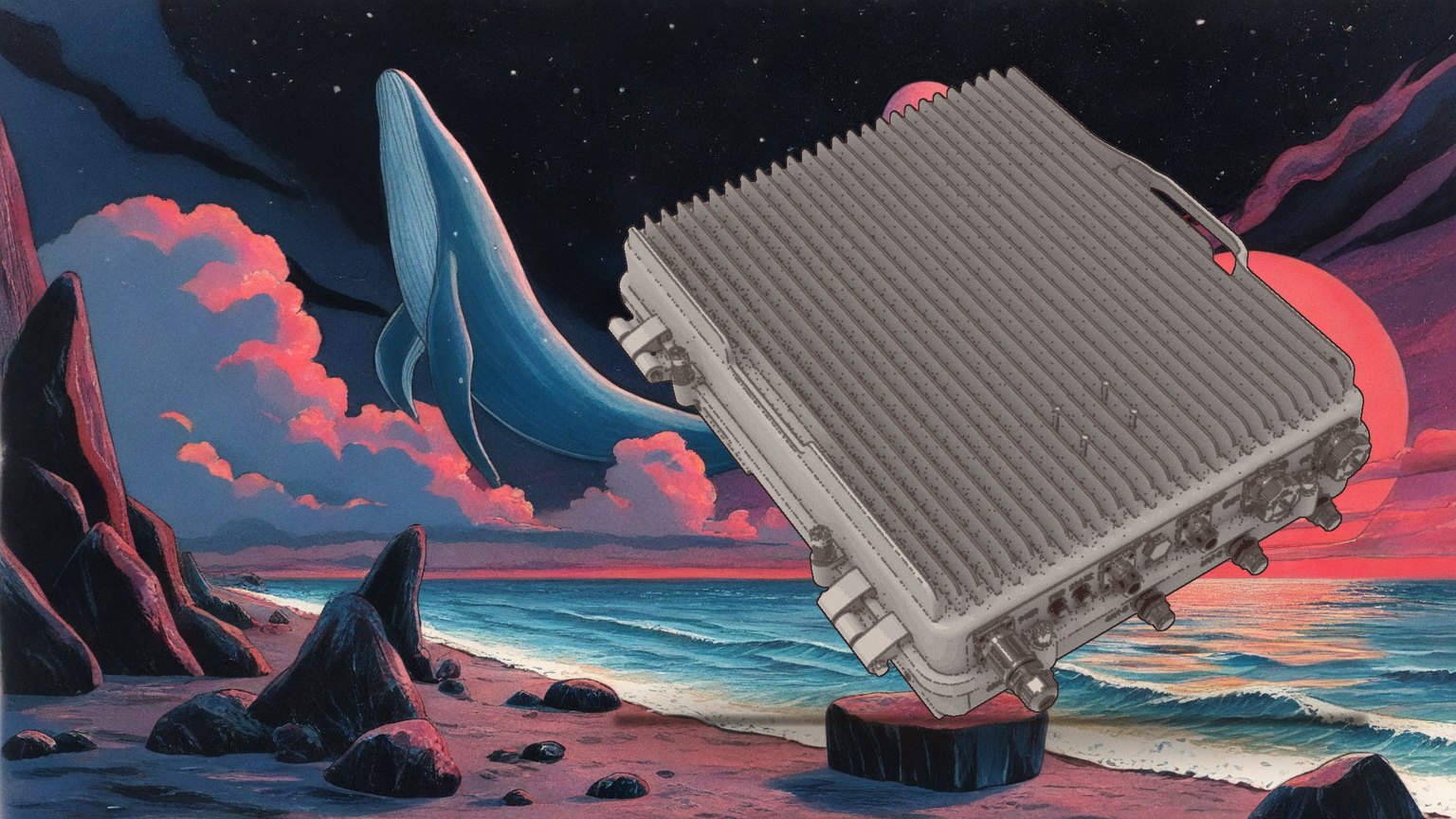
It is an outdoor base station device that manages two independent LTE TDD carriers, one on band 38 and one on band 39. Its architecture allows for the aggregation of the two carriers to increase the bandwidth available to users. It is built for installation on poles or walls, featuring IP66 protection that makes it suitable for adverse weather conditions, operating in a temperature range from -40°C to +55°C.
What are the main technical specifications?
The key specifications listed in the MikroTik datasheet include:
- Operating bands: B38 (2570-2620 MHz) and B39 (1880-1920 MHz).
- Output power: 2*(2*10W), with 40 ± 1dBm per antenna, supporting MIMO 2×2 on each carrier.
- Peak speed (per 20 MHz carrier): DL 140 Mbps (256QAM, SF2) and UL 30 Mbps (64QAM, SF1).
- Peak speed (Carrier Aggregation): DL 280 Mbps and UL 60 Mbps.
- User capacity: Up to 2 192 connected RRC users and 2 96 active users.
- Channel bandwidth: 5/10/15/20 MHz.
- Backhaul: 1 RJ45 Ethernet port (10/100/1000) and 1 SFP optical slot.
- Power supply: 48V DC, with power consumption under 200 W.
- Dimensions and weight: Volume < 22.2L, weight < 25 kg.
- LTE standard: 3GPP Release 12.
- Synchronization: GPS, 1588v2, Network Listening.
Who is it for, and in which scenarios does it make sense?
This device is suitable for mobile network operators or WISPs that need to cover areas where the signal does not arrive directly (NLOS) thanks to its high transmission power. The dual-band 38 and 39 capability makes it useful in markets where these frequencies are allocated for mobile services. Its compact size and low weight facilitate installation in tight spaces or on existing structures, reducing operational costs (OPEX) thanks to low power consumption.
What to know before choosing it?
It is essential to verify the availability of bands 38 and 39 in your geographic area, as the device operates exclusively in TDD on these frequencies. Network management is handled through IP-based interfaces, supporting protocols such as TR069 for network management. The device requires a reliable backhaul infrastructure, either via Ethernet or optical fiber, to fully leverage the declared peak speeds.
Frequently asked questions
What is the maximum output power of the Intercell 10 B38+B39?
The Intercell 10 B38+B39 offers a maximum output power of 40 ± 1dBm per antenna, with a 2*(2*10W) configuration that supports MIMO 2×2 on each carrier.
Does the Intercell 10 B38+B39 support carrier aggregation?
Yes, the Intercell 10 B38+B39 supports carrier aggregation between bands 38 and 39, achieving aggregate peak speeds of 280 Mbps in downlink and 60 Mbps in uplink with a 20 MHz bandwidth.
What is the power consumption of the Intercell 10 B38+B39?
The power consumption of the Intercell 10 B38+B39 is under 200 W, powered via 48V DC, a feature designed to reduce operational costs in outdoor installations.
What type of backhaul does the Intercell 10 B38+B39 support?
The Intercell 10 B38+B39 features an RJ45 Ethernet interface (10/100/1000) and an SFP optical slot for backhaul, offering flexibility in network connections.
Learn more on the MikroTik website: Intercell 10 B38+B39 page and official datasheet (PDF).