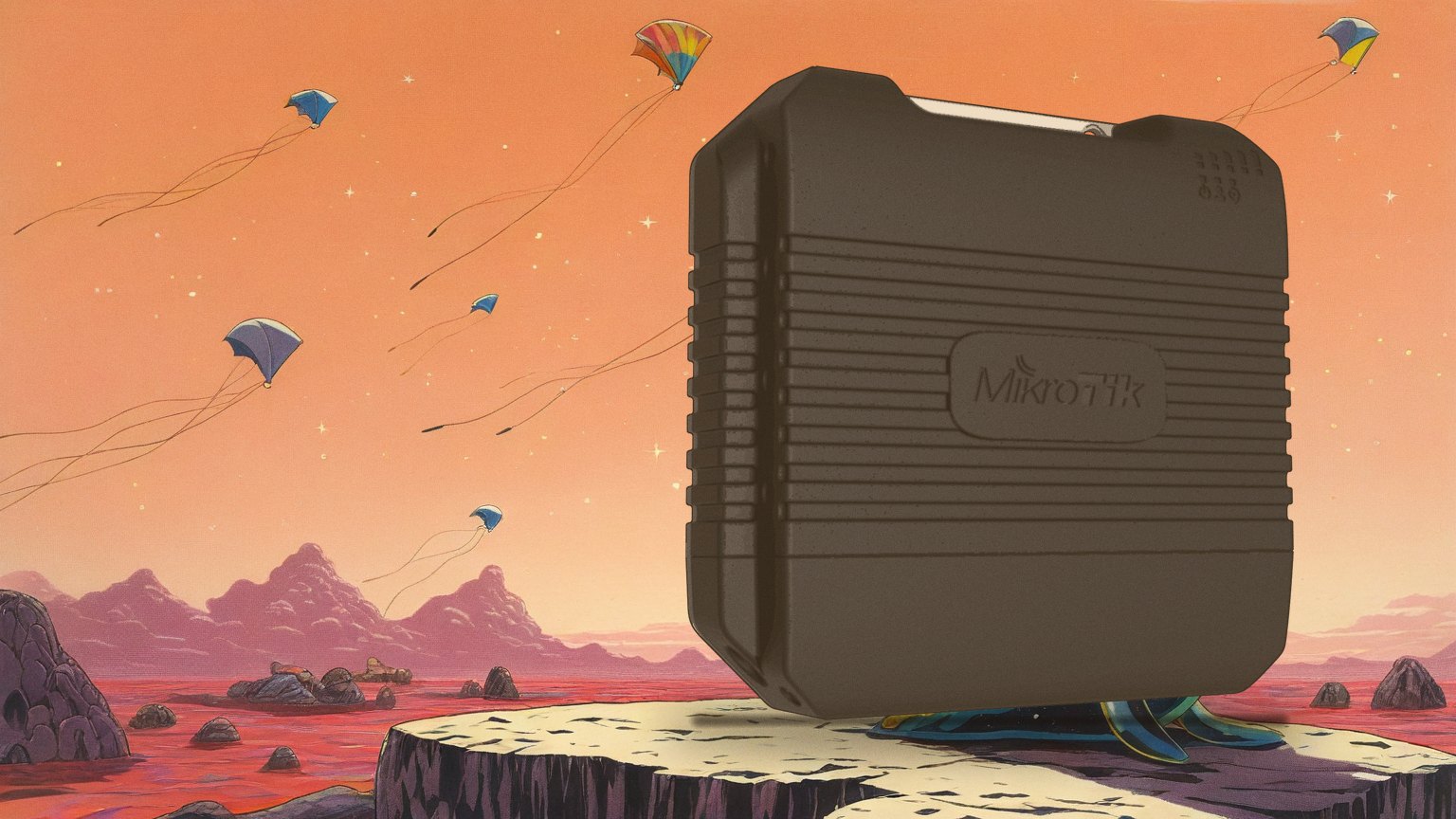
What is the MikroTik LtAP LR8 LTE kit?
It is a rugged, heavy-duty device that combines multiple functions in a single chassis. Inside the case, you will find a 2.4 GHz access point, a Gigabit Ethernet port with PoE-in, an LTE modem with three MiniSIM slots, and a dedicated miniPCIe card for LoRa® technology. The operating system is RouterOS (level 4 license), which allows you to manage firewall, VPN, scripting, and centralized wireless device management via CAPsMAN.
What are the main technical specifications?
The key specifications of the device include:
- CPU: Dual-core MediaTek MT7621 at 880 MHz.
- Memory: 128 MB RAM and 16 MB flash storage.
- Network ports: 1 Gigabit Ethernet port (with PoE-in support), 1 USB 2.0 Type A port, 1 RS232 serial port.
- Wireless: 2.4 GHz 802.11b/g/n dual-chain, internal antenna with a maximum gain of 2.5 dBi.
- Mobile connectivity: LTE Cat 4 modem (150 Mbps down / 50 Mbps up), 3G and 2G. Three MiniSIM slots (slot #1 is not connected to the LTE interface).
- LoRa®: R11e-LR8 card, frequency 863-870 MHz, RF power 20 dBm, receive sensitivity -137 dB @ SF12.
- GPS: Integrated receiver with a female SMA connector for an external antenna.
- Power supply: DC jack (12-30 V), passive PoE-in (12-30 V), or automotive connector.
- Power consumption: Maximum 12 W without accessories, 25 W with accessories.
- Dimensions and temperature: 170 x 162 x 40 mm; operating range from -40°C to +50°C.
Who is it for and in which scenarios does it make sense?
This device is ideal for network administrators, WISPs, and users who need a mobile base station for the Internet of Things. It is particularly suitable for agricultural monitoring (animal tracking, irrigation control), logistics, vehicle tracking, and smart city applications. The presence of three SIM slots facilitates roaming between mobile operators, while compatibility with The Things Network allows you to quickly integrate LoRa® sensors into an existing network or create a new IoT infrastructure.
What to know before choosing it?
You must consider that the USB 2.0 port may not be usable in the standard configuration due to the presence of the LoRa® card; to access it, you need to remove the R11e-LR8 card. Additionally, SIM slot #1 is not connected to the LTE interface, so only slots #2 and #3 are available for SIM cards. The device is designed primarily for 12 V automotive power systems, but it also supports 24 V with a maximum charging voltage of 27 V.
Frequently asked questions
Does the MikroTik LtAP LR8 LTE kit support The Things Network?
Yes, the device is ready for integration with The Things Network, the open-source infrastructure that provides free coverage for LoRa® networks. This allows you to launch IoT solutions quickly without having to build a proprietary infrastructure from scratch.
How many SIM cards can the MikroTik LtAP LR8 LTE kit hold?
The device has three physical MiniSIM slots, but only slots #2 and #3 are connected to the LTE interface. Slot #1 is not active for mobile connectivity, so you can use at most two SIM cards simultaneously for roaming or failover.
What is the maximum range of the LoRa® module in the MikroTik LtAP LR8 LTE kit?
Using the 6.5 dBi MikroTik LoRa® kit antenna, the stated range is up to 15 km in rural environments and up to 2 km in urban environments. The maximum receive sensitivity is -137 dB at spreading factor SF12.
Can the MikroTik LtAP LR8 LTE kit be powered by a power bank?
Yes, the device supports power via DC jack or PoE-in in the 12-30 V range. MikroTik reports that users have powered the device with 20,000 mAh power banks for an entire day, making it suitable for off-grid or mobile scenarios.
Learn more on the MikroTik website: LtAP LR8 LTE kit page and official datasheet (PDF).