Router
MikroTik router: CCR, RB, hAP, Chateau and similar: all dojo articles on this topic.

Containers on RouterOS: what they are, which devices run them, and why they’re Docker images
A container on RouterOS runs a packaged Linux program inside the router, isolated from the rest. It's not a virtual machine and not a system container like Proxmox LXC: RouterOS runs Docker (OCI) images, sharing its own kernel. They run only on ARM, ARM64 and x86 CPUs (not MIPS), need space and memory, and stay off until you unlock them with a physical confirmation via device-mode.
 Lab
CVE-2025-56566: Plaintext credentials in the flash of RouterOS 7.19.4 and 7.24.5
We have verified that credentials for external services (SMTP, PPP) and DHCP leases are stored in plaintext in the non-volatile memory of MikroTik devices. The vulnerability persists in the latest stable version tested, 7.24.5, confirming the absence of a fix at the time of testing.
 Dojo
Containers on MikroTik: what they are and what they see of the kernel
RouterOS 7 can run containers: small Linux systems inside the router. But a container is not a virtual machine: it shares the router's kernel. In the lab we open one up and look at what it really sees of the system (kernel, memory, processes, disk), what changes with privileged=yes, and how to use them without handing the router to an image pulled off the Internet.
 Knowledge base
Device-mode on RouterOS: the physical lock on dangerous features
Device-mode is a lock RouterOS puts on some powerful features (containers, bandwidth test, sniffer, proxy…): they stay off until you turn them on with a physical confirmation on the router, a button press or a power cycle. It exists to stop anyone who gets in remotely, even with the administrator password, from using those features to attack others.
 Products
SXTsq Embedded LTE4: outdoor LTE device with RouterOS
The SXTsq Embedded LTE4 is a compact outdoor LTE device designed to provide reliable connectivity in rural or remote areas where traditional broadband is unavailable. It features an integrated 2x2 MIMO directional antenna, eSIM support, and the ability to manage complex networks thanks to RouterOS v7, while maintaining a maximum power consumption of only 5 W.
 Products
LHGG LTE7 kit: CAT7 LTE antenna for last mile
The LHGG LTE7 kit is an outdoor unit for "last mile" Internet access in remote areas, designed to operate where cellular coverage is weak. It features an integrated LTE Category 7 modem with upload speeds up to 100 Mbps and a 17 dBi directional antenna with a wind-resistant grid design. It is ideal for pole or mast installations in rural or high-traffic environments.
 Products
wAP ax LTE7 kit: Wi-Fi 6 and LTE CAT7 access point
The wAP ax LTE7 kit is a waterproof (IP66) outdoor access point that combines dual-band Wi-Fi 6 radio and an LTE CAT7 modem. It is designed to provide reliable connectivity in challenging rural or public environments, offering an enhanced ARM platform and a discreet, vandal-resistant design.
 Products
RB1100AHx4: 1U rackmount router with 13 Gigabit ports
The RB1100AHx4 is a 1U rackmount router designed for network administrators and WISPs who require high Ethernet port density and high performance. It features a quad-core Cortex A15 processor and is available in a "Dude" version with extended storage, ideal for intensive workloads such as proxy cache or Dude databases.
 Products
CCR2004-16G-2S+PC: MikroTik Router with 16 GbE Ports and 2 SFP+
The CCR2004-16G-2S+PC is a wired network router designed for enterprise and WISP environments that require high performance in a silent form factor. It features 16 Gigabit Ethernet ports and two 10G SFP+ slots, powered by a 64-bit quad-core ARM CPU. It is intended for users who need an "all-in-one" device capable of handling internal traffic and uplink/downlink without bottlenecks.
 Products
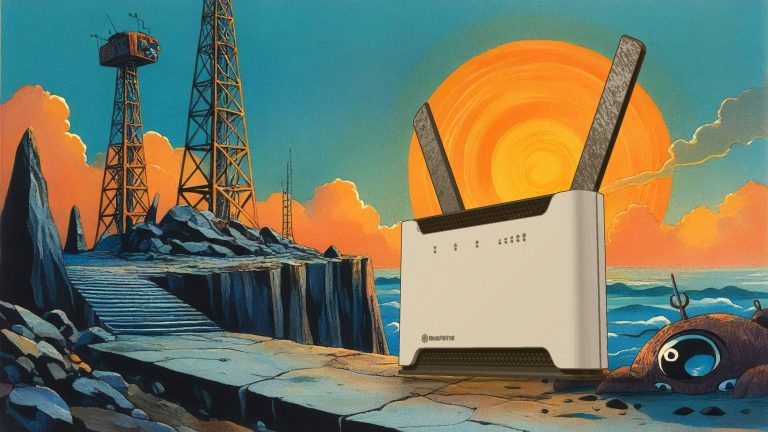
Chateau 5G R17 ax: 5G router with eSIM and RouterOS v7
The Chateau 5G R17 ax is a MikroTik 5G home router featuring an integrated Release 17 modem, dual-band Wi-Fi 6, and native eSIM support. It is designed for users who require high-performance mobile connectivity without sacrificing the advanced control provided by RouterOS v7, eliminating the exclusive reliance on physical SIM cards.
 Products
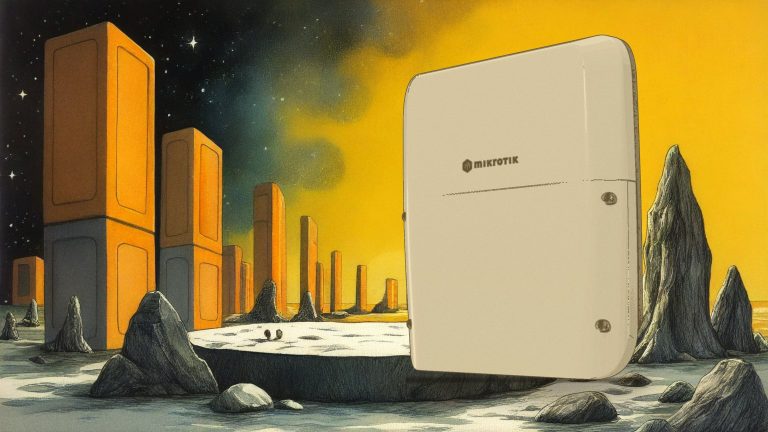
RB5009UPr+S+OUT: MikroTik Outdoor PoE Router
The RB5009UPr+S+OUT is an outdoor industrial router with an IP66 enclosure, designed to ensure high power redundancy and solid performance in exposed environments. It features 9 power options, a quad-core ARM CPU, and a mixed network interface including Gigabit, 2.5G, and SFP+ 10G ports.
 Products
CCR2004-1G-12S+2XS: MikroTik Router for SFP and SFP28 Management
The CCR2004-1G-12S+2XS is an enterprise-grade router designed for centralized management of high-speed optical interfaces. It targets WISPs and network administrators who need to aggregate 10G and 25G traffic in a single rackmount device, offering BGP and IPsec processing performance comparable to the CCR1009/CCR1016 models.
 Products
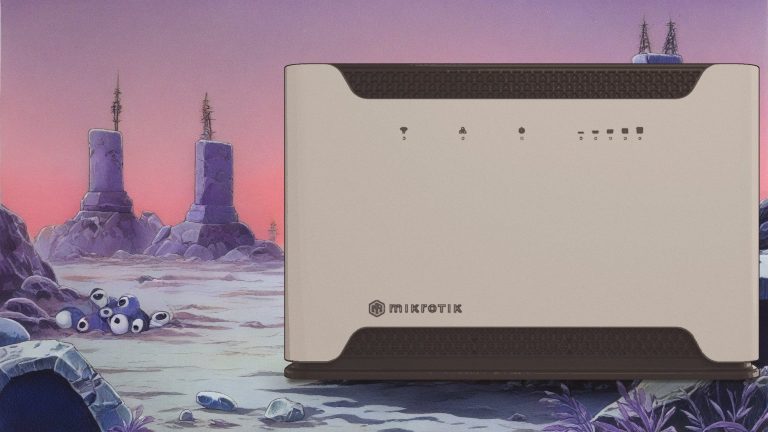
Chateau 5G R16: 5G Router with RouterOS and Linux Containers
The Chateau 5G R16 is a mobile 5G router designed to provide high-speed connectivity in home and office environments, integrating the flexibility of RouterOS v7. It stands out for its support of Linux containers, allowing you to run applications like PiHole or Home Assistant directly on the device, in addition to a Sub-6 5G radio with NR CA and ENDC support.